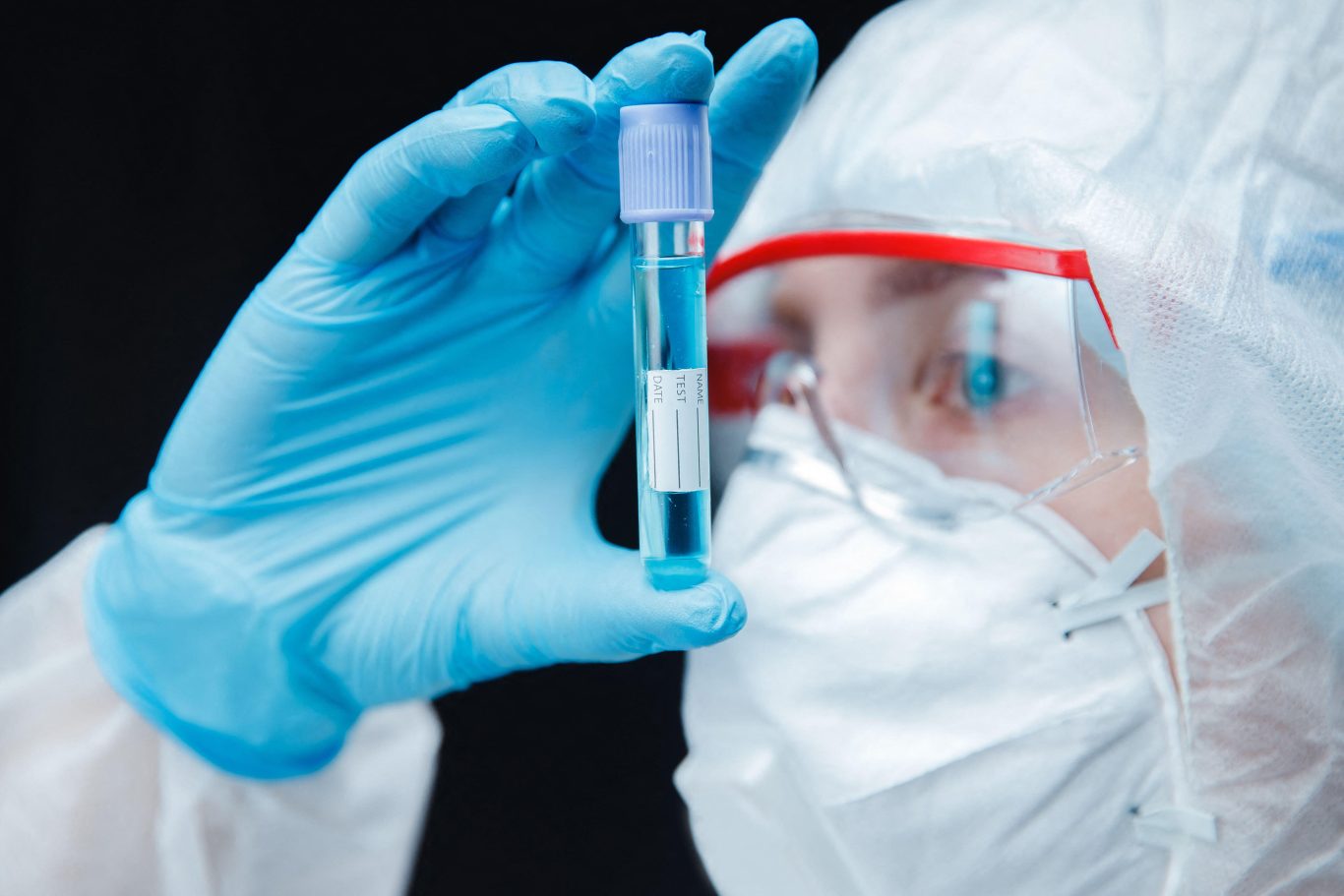
A reported fatal incident at a Russian laboratory studying some of the world’s most dangerous pathogens has raised serious concerns about biological safety, military research and civilian protection. The incident is a reminder that plague, the disease responsible for the Black Death, has never disappeared. The bacterium Yersinia pestis remains a serious biological threat, and protecting families against airborne contamination requires preparation long before an emergency begins.
A Mysterious Death at a Russian Plague Laboratory
Reports emerging from Russia in October 2026 described the death of a female laboratory worker associated with an institute specialising in dangerous infectious diseases.
According to circulating accounts, the woman accidentally broke a laboratory tube containing a dangerous biological agent and died several days later. Russian authorities have disputed claims that her death resulted from laboratory exposure, describing the cause as pneumonia of unknown origin.
The reported accident and the precise cause of death have not been independently established.
Nevertheless, the incident has attracted attention because of the nature of the institution involved.
Russia maintains specialist research facilities studying plague and other dangerous infectious diseases. Officially, these laboratories conduct research for medical, scientific and public-health purposes.
However, the history of biological weapons development demonstrates that research involving dangerous pathogens can also have military applications.
This raises an uncomfortable question: how can the public be certain that all research involving dangerous biological agents is conducted exclusively for peaceful purposes?
The Black Death — One of History’s Greatest Killers
Plague is one of the most feared infectious diseases in human history.
It is caused by the bacterium Yersinia pestis, which was responsible for the Black Death, the devastating pandemic that swept across Europe during the 14th century.
The Black Death killed tens of millions of people, destroying entire communities and dramatically changing European society.
At the time, there were no antibiotics, no modern intensive-care facilities and very limited understanding of how infectious diseases spread.
For many victims, infection meant almost certain death.
Today, modern medicine has transformed the treatment of plague. Antibiotics can successfully treat many infections when administered promptly.
However, the bacterium responsible for the Black Death has never disappeared.
Yersinia pestis continues to exist in natural animal populations and remains the subject of scientific research around the world.
One particularly dangerous form is pneumonic plague, which affects the lungs.
Unlike bubonic plague, pneumonic plague can spread directly between people through infectious respiratory droplets during close contact.
Without rapid medical treatment, pneumonic plague can progress extremely quickly and become fatal.
The disease that devastated medieval Europe therefore remains a modern public-health concern.
Why Are Russian Laboratories Still Studying Plague?
There are legitimate reasons for scientists to study Yersinia pestis.
Research helps improve diagnostic methods, develop treatments, monitor natural outbreaks and prepare healthcare systems for possible emergencies.
But biological research has another, more troubling history.
During the Cold War, the Soviet Union operated an extensive biological weapons programme involving research into dangerous pathogens.
Biological agents attracted military interest because of their potential to cause widespread illness, overwhelm healthcare systems and disrupt civilian and military operations.
The Biological Weapons Convention prohibits the development, production and stockpiling of biological weapons.
Nevertheless, some scientific research involving dangerous pathogens has both civilian and military relevance.
This is known as dual-use research.
A laboratory investigating how to detect or defend against a dangerous pathogen may develop knowledge that could also be misused.
This does not prove that the Russian laboratory involved in the reported incident was conducting biological weapons research.
There is currently no verified evidence that the incident involved an engineered plague strain or an active biological weapons programme.
However, the Soviet Union’s documented history of biological weapons development demonstrates why transparency and independent oversight remain essential.
Could Modern Biological Threats Be More Dangerous Than the Black Death?
The Black Death occurred centuries before modern medicine.
Today, most plague infections can be treated with appropriate antibiotics if diagnosed early enough.
However, modern biological security concerns extend beyond naturally occurring infectious diseases.
Antimicrobial resistance is a recognised medical challenge, and the possibility of dangerous pathogens being deliberately misused remains a serious international security concern.
Drug-resistant infections can be more difficult to treat, particularly when effective medicines are unavailable or treatment is delayed.
The potential misuse of biological agents also raises concerns about deliberate attacks and the possibility of large-scale disruption.
It is important to distinguish these general risks from the reported Russian laboratory incident.
No reliable evidence currently establishes that the laboratory worker was exposed to an unusually dangerous, genetically modified or treatment-resistant strain of Yersinia pestis.
Nevertheless, the existence of research facilities handling dangerous pathogens highlights the importance of strict containment procedures.
A serious laboratory failure involving a hazardous biological agent can endanger workers and potentially create wider public-health concerns, depending on the pathogen and circumstances.
Donald Trump Offers Assistance to Russia
The reported laboratory incident attracted international attention, including an offer of assistance from US President Donald Trump.
Cooperation between countries can be especially important when investigating dangerous infectious diseases.
The United States and Russia have experienced considerable political tensions, but biological security is an issue that can affect populations far beyond national borders.
Independent scientific investigation can help establish the cause of an incident, identify potential exposures and determine whether additional public-health measures are required.
Whether Russia accepts international assistance is a separate question.
Any conclusions about the motives behind accepting or refusing such assistance would be speculative without supporting evidence.
What matters most is transparency, reliable scientific information and the prevention of further harm.
Biological Threats Do Not Respect Borders
Unlike conventional military attacks, biological emergencies may develop without obvious warning.
A missile strike produces an explosion. An industrial fire produces visible smoke.
A dangerous biological exposure may initially be invisible.
Depending on the pathogen, symptoms may not appear immediately. By the time an unusual cluster of infections is identified, authorities may already be investigating multiple possible sources.
International travel, densely populated cities and interconnected transport systems can complicate the response to infectious disease outbreaks.
Hospitals may face additional pressure, travel restrictions may be introduced and essential services may be disrupted.
Not every biological agent spreads efficiently between people, and not every laboratory incident presents a wider public-health threat.
However, the consequences of a serious biological emergency can extend well beyond the original location.
The Black Death demonstrated the devastating impact infectious disease can have on society.
Modern healthcare provides vastly better protection, but the need for preparedness remains.
Why Ordinary Homes Are Not Designed for Biological Emergencies
Most homes are designed to provide comfortable living conditions.
They are not designed to operate as protective shelters during chemical, biological or radiological contamination incidents.
Ordinary ventilation systems bring outside air into buildings, while conventional household filters are generally not intended to provide comprehensive NBC/CBRN protection.
Even a basement with reinforced walls may remain vulnerable to contaminated outside air entering through ventilation openings, doors, windows and other leakage points.
This is why a properly designed protective shelter requires more than structural strength.
It also needs suitable ventilation, air filtration, pressure control, emergency power and provisions for occupants to remain safely inside.
The ability to maintain an appropriate supply of filtered fresh air is a fundamental part of shelter design.
NBC/CBRN Air Filtration — An Essential Part of Shelter Protection
Modern NBC/CBRN air filtration systems are designed to help protect occupants against specified airborne hazards.
High-efficiency particulate filters can remove airborne particles, including particles carrying biological agents.
Specialised activated-carbon filtration is used to address relevant chemical contaminants.
Positive-pressure ventilation provides another important protective measure.
By maintaining slightly higher air pressure inside the shelter than outside, a properly designed system helps reduce the uncontrolled entry of contaminated outside air through gaps and leakage points.
Blast-protected ventilation components can also help protect air intake and exhaust arrangements against specified blast-pressure conditions.
However, no filtration system guarantees complete protection against every biological threat.
Effectiveness depends on the contaminant, exposure route, shelter construction, correct installation, maintenance and operating conditions.
NBC/CBRN filtration is not a substitute for medical treatment, infection-control procedures or official public-health guidance.
It is one important component of a comprehensive protective shelter.
Castellex Air550HCC Ultimate — Advanced British NBC/CBRN Air Filtration
British manufacturer Castellex Ltd specialises in NBC/CBRN air filtration systems for private shelters, bunkers, protected rooms and specialist applications.
One of its advanced solutions is the Air550HCC Ultimate, designed to provide filtered fresh air and support positive-pressure protection within properly engineered shelters.
The system incorporates H14 HEPA filtration for high-efficiency removal of airborne particles, together with a specialised activated-carbon NBC filtration cell.
It also features electronic controls, electrically operated dampers, blast-protected ventilation arrangements and two integrated backup batteries.
An emergency hand-crank generator provides an additional method of charging the backup power supply when normal electricity is unavailable.
These features make the Air550HCC Ultimate suitable for consideration as part of a professionally designed private shelter.
A protective shelter needs to function when normal conditions deteriorate.
Reliable air filtration, protected ventilation and backup power arrangements are therefore important considerations.
Learn more about the Castellex Air550HCC Ultimate and other NBC/CBRN filtration systems at https://www.castellex.com/
A Bunker Without Proper Air Protection Is an Incomplete Bunker
The growing interest in private shelters reflects wider concerns about international security, military conflict, industrial accidents and emergency preparedness.
For homeowners investing in a bunker or protected room, structural protection is only one part of the equation.
A shelter may have reinforced concrete walls, a blast-resistant door and emergency supplies.
But if contaminated outside air can enter freely, its protective capability may be seriously compromised.
A properly engineered NBC/CBRN air filtration system helps address this vulnerability.
For families planning private shelters, filtration and ventilation should be considered from the earliest design stages.
Retrofitting a suitable system after construction can be more complicated than integrating it into the original shelter design.
Protecting Your Family Starts Before an Emergency
The reported Russian laboratory death has renewed attention on dangerous biological research and laboratory safety.
The full circumstances of the incident require credible investigation, and allegations about laboratory accidents, engineered pathogens or military involvement should not be treated as established facts without evidence.
Nevertheless, the wider biological threat is real.
The bacterium Yersinia pestis, responsible for the Black Death, continues to exist today.
Dangerous infectious diseases remain a public-health concern, and the historical development of biological weapons demonstrates why biological security must be taken seriously.
Governments, healthcare systems and international organisations have essential responsibilities in preventing and responding to biological emergencies.
Individual preparedness also matters.
Families can improve their resilience through emergency planning, reliable information, appropriate supplies and, where justified, properly designed protective shelters.
For homeowners investing in private bunkers, suitable NBC/CBRN air filtration should be regarded as an important part of the overall protection strategy.
Because a reinforced door cannot protect your family from contaminated air entering through an unprotected ventilation system.
Castellex Air550HCC Ultimate — Advanced NBC/CBRN Air Filtration for Those Who Take Family Protection Seriously.
Discover British-manufactured NBC/CBRN air filtration systems:


